
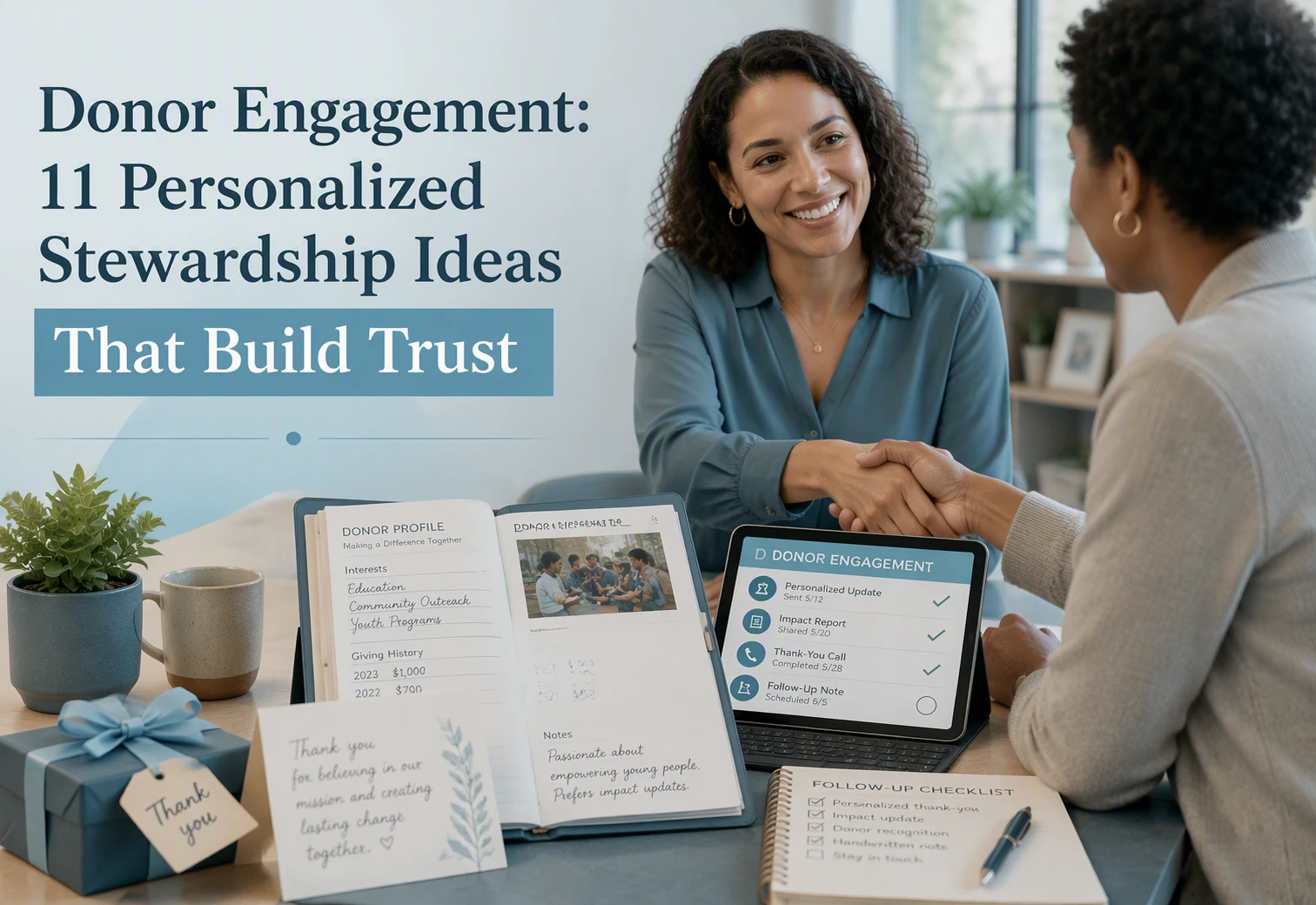
Quick Summary: Personalized donor stewardship builds trust by making supporters feel remembered and respected through timely thank-yous, impact updates, and milestone recognition. Using simple, targeted strategies like fast acknowledgments and preference-based communication enhances loyalty and retention. Small teams can implement these ideas with existing tools by focusing on consistency and relevance.
A donor who feels remembered is more likely to feel respected. That is the real value of personalized stewardship. Many nonprofits still send generic thanks and broad newsletters, so supporters feel like records, not partners. That trust gap grows fast. The ideas below show how personalized stewardship can feel timely and human. Each personalized stewardship move was picked to boost relevance, cut friction, and build trust for both lean and growing teams.
Quick Comparison
| Idea | Best for | Trust Impact | Ease of Implementation | Primary Use Case |
|---|---|---|---|---|
| Personalized thank-you within 24–48 hours | Making the first post-gift interaction feel warm and specific | Very high | High | First-time donor acknowledgement |
| Segmented impact updates | Proving the value of a donor’s contribution | Very high | Medium | Post-gift reporting and ongoing stewardship |
| Preference-based communication | Making outreach feel respectful and easy to receive | High | Medium | Channel and cadence personalization |
| Milestone and anniversary recognition | Making donors feel remembered over time | High | Medium | Anniversary and loyalty stewardship |
What to know about donor engagement
Donor engagement is the ongoing relationship between your nonprofit and the people who support it. Personalized stewardship keeps that relationship human. It shows donors you know who they are, what they care about, and why their gift matters.
That matters more now because donors expect timely, relevant communication. When you thank people fast, match outreach to their preferences, and connect giving to real results, trust grows.
Strong trust often leads to repeat gifts, deeper loyalty, and better long-term retention.
1. Personalized thank-you within 24–48 hours
A fast, personal thank-you is the clearest early sign of respect. The National Council of Nonprofits says acknowledgments should go out soon after the gift, and AFP notes best practice is within 48 to 72 hours.

Highlights
- Use the donor’s name and exact gift or campaign.
- Add one specific impact line.
- Route first-time or high-value donors to a human follow-up.
Specs
- Best for: First-time donor acknowledgement
- Trust Impact: Very high
- Ease of Implementation: High
- Primary Use Case: Making the first post-gift interaction feel warm and specific
Pros
- Immediate trust-building
- Easy to standardize with light personalization
Cons
- Can feel mechanical if copied and pasted
It ranks first because this moment sets the tone for every later touch.
Last updated: August 3, 2026
Also Read: Latest Innovations in Donor Engagement from 2026 Headlines
2. Segmented impact updates
Show donors what their gift actually did. Segment updates by program, campaign, or donor type so each person sees results that match their support. Bloomerang’s donor segmentation guide and DonorPerfect’s impact reporting advice both point to more relevant, donor-specific communication.

Highlights
- Tie outcomes to the donor’s gift area.
- Use short stories, photos, or quick outcome snapshots.
- Match frequency to donor tier and engagement.
Specs
- Best for: Proving gift value
- Trust Impact: Very high
- Ease of Implementation: Medium
- Primary Use Case: Post-gift reporting and ongoing stewardship
Pros
- Builds confidence and supports retention
Cons
- Needs clean segment data
It ranks high because relevant proof feels personal, not mass-produced.
Last updated: August 3, 2026
Also Read: Donor Engagement Data Guide for Smarter Fundraising Decisions
3. Preference-based communication
Ask donors how they want to hear from you. That simple step makes stewardship feel respectful, not intrusive, and helps build donor trust.

Highlights
- Capture channel, tone, and frequency early, then refresh them often.
- Use preferences for both thanks and asks. Give.org research shows donors vary in openness to solicitation, and online donor survey data shows clear channel preferences.
Specs
- Best for: Making outreach feel respectful and easy to receive
- Trust Impact: High
- Ease of Implementation: Medium
- Primary Use Case: Channel and cadence personalization
Pros
- Improves relevance and response rates
- Helps prevent communication fatigue
- Signals donor respect
Cons
- Requires steady data upkeep
- Gets missed when teams rush
It ranks here because giving donors more control lowers friction and makes personalized stewardship feel safer.
Last updated: August 3, 2026
Also Read: Resources – Cherian Koshy
4. Milestone and anniversary recognition
Remember the moments that matter to the donor. Marking a first gift, monthly giving anniversary, or long-time membership milestone shows you remember the person, not just the payment. With donor retention still tight across the sector, stewardship habits that deepen connection matter according to FEP.

Highlights
- Celebrate first gifts, recurring anniversaries, and major milestones.
- Customize each note with donor history, tenure, and a short impact reflection.
Specs
- Best for: Making donors feel remembered over time
- Trust Impact: High
- Ease of Implementation: Medium
- Primary Use Case: Anniversary and loyalty stewardship
Pros
- Creates meaningful recurring touchpoints
- Easy to automate with CRM reminders, a common stewardship move for recurring programs highlighted here
- Strengthens loyalty over time
Cons
- Can feel formulaic if every note is identical
- Needs reliable date tracking
It ranks here because milestones create emotional continuity and help donors feel part of a long story.
Last updated: August 3, 2026
Honourable Mentions
A few strong ideas did not make the main list, but they still help deepen donor engagement. Use them to add a more human, trust-building layer.
- Values-aligned content journeys – Match messages to what motivates each donor.
- Donor listening and feedback loops – Ask donors how the experience is going.
- Personal calls or voice notes for key donors – A human voice still matters.
- Invitation-based involvement opportunities – Give donors a way to participate, not just give.
- Recognition that respects privacy preferences – Celebrate donors in ways that feel comfortable to them.
- Behavioral journey mapping – Design stewardship around real donor behavior.
- Surprise-and-delight stewardship moments – Small unexpected moments can leave a big impression.
How to choose the right stewardship ideas
Use these criteria to pick first:
- Fix the weakest stage first. If first-time donors drop fast, start with thank-yous, impact updates, and milestone follow-up.
- Match effort to team size. Lean teams should choose simple, repeatable touches. Bigger teams can add calls, journeys, and feedback loops.
- Use preference data. Channel, recognition choice, and interest area can make basic outreach feel personal.
- Cut friction. Pick ideas that make the message clear fast.
- Blend system and human care. Automate consistency, then add real human moments.
- Review what builds trust. Track retention, repeat gifts, and replies.
If you want help choosing well, Cherian Koshy stands out for teams that want practical, behavior-based stewardship without overcomplicating the work.
Ready to turn personalized stewardship into a repeatable trust-building system? Work with Cherian Koshy for keynotes, workshops, and strategy that help your team engage donors with confidence.
Frequently Asked Questions
Q1: Best personalized stewardship tactics for donors?
Use gift-triggered thank-yous, impact updates tied to donor intent, staff notes, milestone messages, and simple preference tracking. Match tone, timing, and channel to each donor. Small signals of attention build trust faster than polished mass outreach.
Q2: How often should we personalize donor communication?
Start with key moments, not constant contact. Personalize first gifts, renewals, major anniversaries, and campaign follow-ups. A few timely, relevant touches beat frequent generic emails and help supporters feel seen, not managed.
Q3: What donor data matters most for stewardship?
Keep it simple. Track giving history, stated interests, preferred channel, relationship stage, and past responses. Use only data your team will act on. Good stewardship comes from useful notes, not a crowded database.
Q4: Can small nonprofit teams do this without new software?
Yes. Use your current CRM, shared notes, and a basic touchpoint calendar. Build three or four repeatable templates, then customize the opening and impact detail. The system matters less than consistent follow-through.


