

Quick Summary: Nonprofits should focus on engagement metrics like repeat gifts, event attendance, and email clicks to predict future donations. Segment supporters based on actions and giving patterns to personalize outreach and improve retention. Regularly analyze data trends and avoid relying on weak signals or outdated info to make smarter fundraising decisions.
A first-time donor may open your thank-you email, skip the impact story, and tell you exactly what comes next. Most teams collect Fundraising Data but fail to use it for Supporter Engagement, Donor Analysis, and timing. This guide shows how to turn Fundraising Data into clear segments, smarter outreach, and better follow-up. It draws on real fundraising practice, where good Fundraising Data helps teams act before donor interest fades.
Which Donor Engagement Metrics Matter Most
The best metrics are the ones that predict the next gift, not just past interest. Start with actions that show intent.
Track activity that shows real commitment
Watch for signs a donor is leaning in:
- Gift count
- Volunteer actions
- Event attendance
- Email clicks on appeals
- Recurring gift signup
A one-time open means little. A second gift or monthly start means a lot more.
| Metric | What it shows | Best use |
|---|---|---|
| Second gift | Early loyalty | Welcome series follow-up |
| Monthly signup | Ongoing commitment | Sustainer upgrade |
| Event attendance | Active interest | Invite to deeper involvement |

Use recency, frequency, and monetary value together
RFM gives you a clearer view than any single number. Recency shows who gave lately. Frequency shows habit. Monetary value shows giving level. Used together, they help you spot loyal donors, upgrade prospects, and fading supporters, as explained in DonorSnap’s RFM guide.
Do not rank donors by gift size alone. A smaller donor who gives often may be more valuable long term.
Add retention and reactivation signals
Track overall retention, first-to-second gift conversion, and lapsed donor reactivation. These reveal where your pipeline is leaking. The AFP notes overall donor retention is roughly 43 percent and first-time donor retention roughly 19 percent in recent sector data from the Fundraising Effectiveness Project summary.
Choose metrics that support one fundraising decision
Pick metrics by decision, not by dashboard habit.
- Need upgrade prospects? Use RFM.
- Need better renewal? Use recency plus retention.
- Need win-back lists? Use lapse length plus past frequency.
Also Read: 3 Tips for Winning the Attention Economy in Nonprofit Campaigns – Cherian Koshy
How to Turn Engagement Data Into Better Segments
Start with what supporters do, not who they are. Microsoft notes nonprofits can segment by giving history and engagement, including donor status like active, recurring, LYBNT, and lapsed in its nonprofit guidance. So group people by actions such as email clicks, event attendance, volunteer hours, or petition signups.
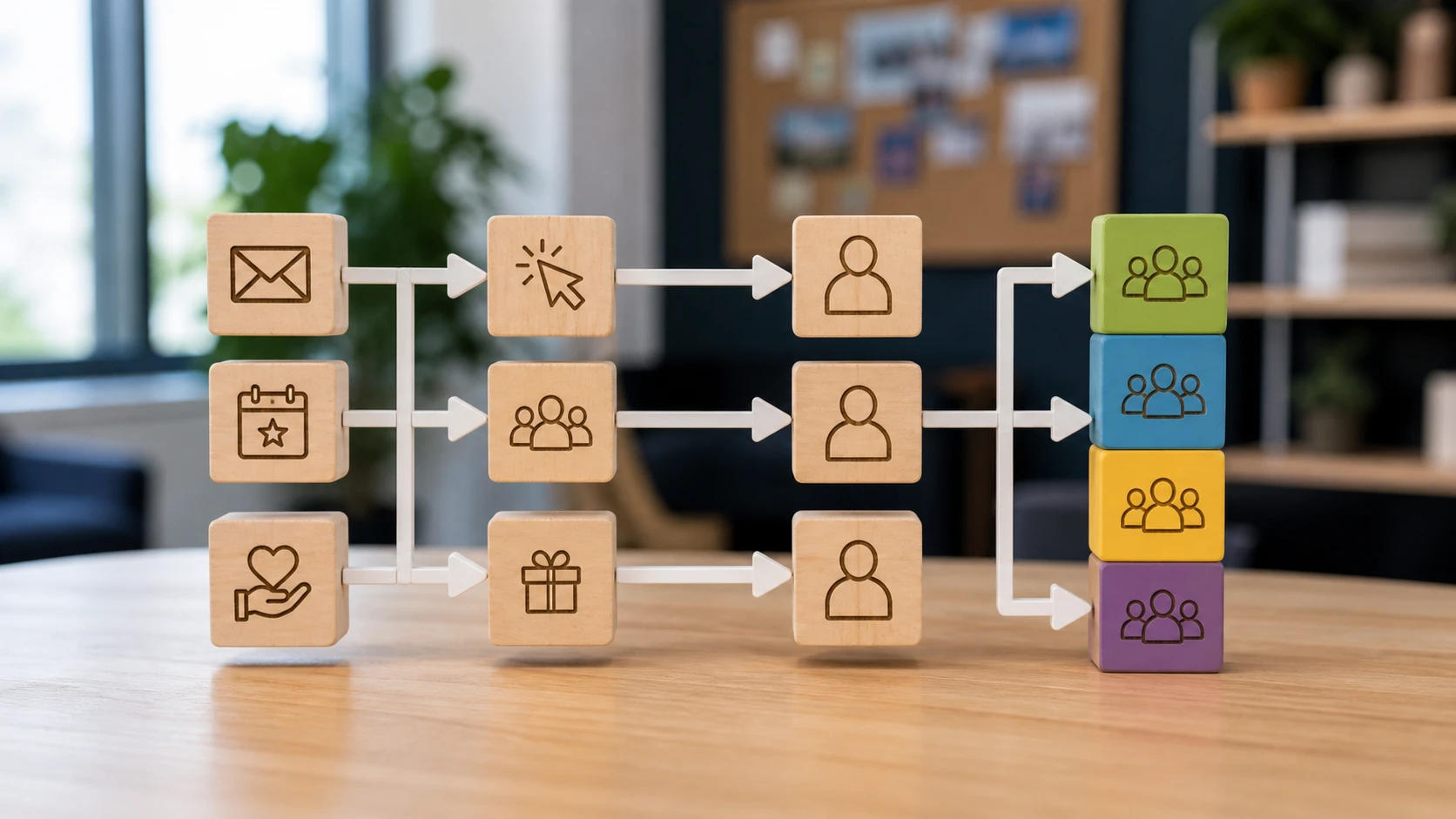
Next, combine engagement with gift data. A donor who opens every email but gave once needs a different message than a quiet donor with three yearly gifts. Use two layers:
- Engagement level
- Giving pattern
| Segment base | Add giving history | Best next move |
|---|---|---|
| High engagement | First-time donor | Second-gift follow-up |
| Low engagement | Repeat donor | Reconnect with impact story |
| Event attendee | Never gave | Small first ask |
Keep one segment tied to one action goal.
DonorPerfect warns that segments should stay manageable, not overly narrow in its 2026 checklist. Build 4-6 usable groups, then test.
How to Read the Data and Act on It
Read patterns before you react. Sector data shows giving rose 5.0% in 2025 while donor counts fell 3.6%, so one good month can hide a weak base, according to the AFP Fundraising Effectiveness Project update.
- Look for trends, not isolated events
- Compare 3, 6, and 12-month views.
- Track repeat gifts, lapses, and response by segment.
- A spike after one email matters less than a steady drop in retention.
- Match outreach to the behavior you see
- Thank first-time donors fast.
- Move repeat donors into impact updates.
- Re-engage lapsed donors with one clear reason to return.
- Overall retention was 43.3% in 2025, per the FEP retention dashboard.
- Review the data on a regular cadence
- Check core metrics monthly.
- Review segments quarterly.
- Change one variable at a time.
Also Read: 2026 Tax Impact – Cherian Koshy
Common Data Mistakes That Lead to Bad Decisions
- Relying on weak signals – One click, one event visit, or one opened email does not prove donor intent. Federal data quality guidance warns weak data can mislead decisions.
- Letting stale data drive campaigns – Old job titles, dead email addresses, and outdated giving history push the wrong ask. NIST quality standards stress usefulness, accuracy, and integrity.
- Tracking too many metrics at once – Too many dashboards blur focus. Pick a short set tied to retention, upgrade rate, and response, then act on it.
Turn donor data into better outreach with Cherian Koshy. Book a workshop or strategy session to sharpen segmentation, messaging, and donor trust.
Frequently Asked Questions
Q1: What are the key donor engagement metrics nonprofits should monitor for smarter fundraising?
Track retention rate, gift frequency, average gift, recency, response rate, and upgrade rate. Add channel data like email clicks and event attendance. These numbers show who is loyal, drifting, or ready for a bigger ask.
Q2: How can fundraising analytics improve donor segmentation and personalize outreach strategies?
Use analytics to group donors by behavior, not just age or income. Segment by last gift date, giving pattern, campaign response, and interests. Then match the message, ask size, and timing to each group.
Q3: What tools and software are essential for tracking and analyzing donor data effectively?
Start with a clean CRM, email platform, donation system, and simple dashboard. The best setup links gift history, campaign results, and donor actions in one view. Fancy tools matter less than clean data and regular review.
Conclusion
Better donor engagement data helps you segment clearly, personalize faster, and protect long-term revenue. Sector data shows giving rose while donor counts fell, so smarter retention decisions matter more than ever.


