
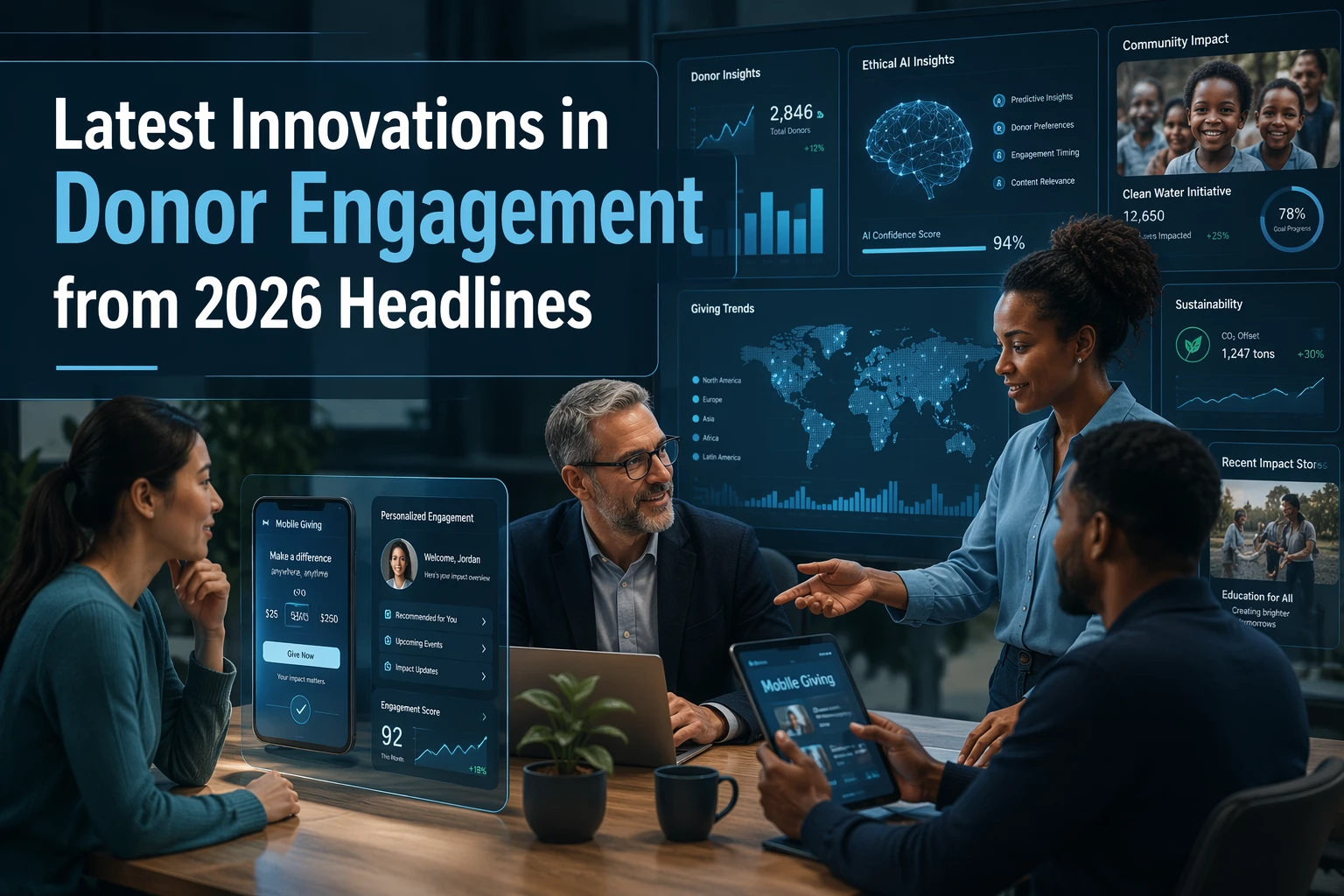
Quick Summary: In 2026, nonprofit donor engagement is shifting toward embedded AI that predicts donor behavior and automates outreach within CRM systems. Trust and transparency are crucial, with donors wanting clear disclosure of AI use and responsible governance. Nonprofits are advised to start small, improve one donor journey at a time, and prioritize trust to effectively leverage these new tools.
July 2026 made the shift plain. Moore, Blackbaud, Bloomerang, Dataro, Virtuous, and Avid pushed embedded AI into daily nonprofit fundraising work. That matters because teams face higher donor expectations, lean staff, and tighter competition. Old lists miss key moments. This review tracks donor engagement strategies, fundraising innovation, and donor engagement strategies that now shape nonprofit fundraising, with clear donor engagement strategies you can act on fast.
The Big Shift: Donor Engagement Is Moving Into the Workflow
Predictive scores are replacing static donor lists. Teams are no longer pulling one list and hoping it holds up for weeks. Newer systems push live signals into the CRM, showing who may lapse, upgrade, or give now. In July 2026, Bloomerang and Dataro said predictive donor signals and recommended next actions now sit directly in donor records for more than 24,000 nonprofits, which shows where the market is heading predictive fundraising inside Bloomerang.
Agentic tools are starting to handle outreach work. That means software can draft, send, and track personalized follow-up inside the same system, with staff review. Blackbaud says its Development Agent can run autonomous donor workflows under human supervision, not just suggest tasks autonomous donor engagement workflows.
The smart move is simple: let tools handle repeatable steps, but keep humans on message, timing, and trust.
Also Read: 2026 Tax Impact – Cherian Koshy
What the New Tools Actually Do for Fundraisers
AI prospect research is becoming portfolio-scale. New tools no longer help with just one donor profile at a time. They pull CRM history, wealth clues, public signals, and recent news into one brief so gift officers can prep faster and cover more of the file. Virtuous’s July 2026 launch frames this shift clearly: deep research that once fit only top prospects can now extend across a wider portfolio.
The win is not magic targeting. It is less scavenger-hunt work and more time for calls, visits, and follow-up.
Personalization is getting more specific and more timely. The newer systems do more than draft generic thank-you notes. They trigger messages from donor behavior, spot dormant donors outside major gift portfolios, and run multi-touch outreach with staff oversight. Blackbaud’s 2026 announcement shows where the market is going: embedded AI that suggests who to contact, what to say, and when to send it.
Trust Will Decide Which Innovations Stick
Donors are open to AI, but they want disclosure
Donors are not rejecting AI outright. They are rejecting secrecy. New 2026 reporting on sector research found 56% of donors say clear AI disclosure matters, but only 26% of nonprofits say they disclose it in donor communications, according to the Chronicle of Philanthropy. That gap is where trust breaks.

If AI helps write, segment, or predict, say so in plain language.
Governance is now part of fundraising performance
Governance is no longer a legal side note. It shapes results. Candid’s July 2026 coverage says nonprofits with stronger, responsible AI practices are more likely to see gains in fundraising, retention, and time savings, while only 1 in 10 surveyed organizations reached an “AI-adaptive” level of maturity in Candid’s summary.
- Write a short AI use policy
- Define disclosure rules
- Review donor data safeguards
How Nonprofits Can Use These 2026 Trends Now
Start with one workflow, not a full overhaul
Pick one donor journey and fix that first. Good choices include first-gift follow-up, monthly donor renewal, or lapsed donor win-back. This works because many teams still face fragmented systems and manual cleanup, according to recent nonprofit operations research.
- Choose one high-value moment.
- Map every step from gift to follow-up.
- Remove one delay, one duplicate task, and one vague message.
- Add a trust check.
- Use clearer impact language
- Send faster thank-yous
- Track one result weekly
Keep it small. Candid’s 2026 AI trust findings show responsible, structured use builds better donor trust than ad hoc adoption.
Turn 2026 donor engagement ideas into action with Cherian Koshy – get strategy, workshops, and guidance that build trust and move donors to give.
Frequently Asked Questions
Q1: What are the key innovations in donor engagement for 2026 and how can nonprofits leverage them?
Use AI-guided next steps, better preference data, and faster feedback loops. Start small:
- test one donor journey
- track response, trust, and retention
- keep human review in place
New tech works best when it removes friction, not when it adds noise.
Q2: How does predictive intelligence and AI transform donor relationship management in 2026?
It helps teams spot likely lapses, upgrade asks, and channel choice sooner. The win is not magic targeting. The win is better timing, fewer generic messages, and more useful staff time for real donor care.
Q3: How can nonprofits build trust and transparency through modern donor engagement strategies in 2026?
Show donors what you collect, why you collect it, and how it helps them. Give clear choices. Report back often. If you use behavior science, follow Cherian Koshy’s approach: reduce pressure, increase clarity, and respect consent.
Conclusion
The big shift is clear: donor engagement in 2026 rewards useful AI, clean data, and plain trust signals. Independent Sector polling and Candid’s July 2026 analysis both point to the same lesson – better systems only work when donors understand and trust them.


