


Quick Summary: Relying on one big donor or year-end campaigns leaves nonprofits vulnerable-resilient funding comes from a mix of individual gifts, grants, earned income, and recurring support, each playing a specific role. Track your top funders’ share and renewal rates to spot risks, like a sudden grant loss wiping out budgets, and focus on 1-2 growth areas your team can sustain. The second gift converts donors better than the first, so thank them fast, show impact, and invite low-pressure next steps to build trust before asking for more. Turn this into an operating plan by monitoring key metrics like donor retention and gift size, and bring in consultants only when growth stalls or you need clear strategies to improve trust and systems.
If one year-end campaign or a few major donors carry your budget, your funding base is too fragile. Strong nonprofit revenue comes from a balanced mix of gifts, grants, earned income, and recurring support. This guide shows how to assess nonprofit revenue, set clear priorities, improve the donor experience, and plan for real staff capacity. It draws on proven fundraising and behavioral science principles to help leaders build steadier nonprofit revenue.
1. Understand What Makes Nonprofit Revenue Resilient
Revenue diversity is more than adding funding sources
A resilient model has several income streams that fit your mission, team, and donor relationships. Do not add a gala, grant, or fee just to tick a box. Build a focused mix of individual gifts, grants, earned income, and partners that can support one another. Candid research shows few nonprofits rely on only one source.

Tip: Choose one or two growth priorities your team can sustain well.
Measure concentration and predictability
Track the share of revenue held by your top five funders, renewal rates, and how many months ahead each source is committed. Also monitor cash runway. A sudden loss can quickly create deficits for grant-dependent groups, according to Candid and Urban Institute analysis.
| Measure | Healthy question |
|---|---|
| Top-funder share | Could we operate if this funder left? |
| Renewal rate | How much income is likely to repeat? |
Also Read: Resources – Cherian Koshy
2. Build a Year-Round Fundraising Portfolio
Match each revenue stream to its job
A strong portfolio gives each source a clear role. Individual gifts build flexibility, grants fund defined work, and earned income can cover repeatable services. Urban Institute tracks these distinct sources because nonprofits rarely rely on one alone. Its revenue data tool includes individual, foundation, corporate, government, and earned revenue.
| Revenue stream | Best job |
|---|---|
| Monthly donors | Reliable unrestricted cash |
| Major gifts | Growth and special needs |
| Grants | Funded programs |
| Earned income | Mission-linked services |

Avoid adding a stream just because peers use it. Fund what your team can deliver well.
Create a twelve-month donor rhythm
Plan contact before you need money. Set a simple calendar that mixes impact updates, thanks, asks, and personal outreach.
- Map grant deadlines and campaign peaks.
- Give donors useful proof of impact between asks.
- Review results each quarter and shift effort to strong channels.
| Quarter | Main focus |
|---|---|
| Q1 | Retain and thank |
| Q2 | Grow recurring gifts |
| Q3 | Prepare year-end |
| Q4 | Convert and steward |
Also Read: Donor Engagement Data Guide for Smarter Fundraising Decisions
3. Strengthen the Donor Pipeline, From First Gift to Major Support
Make first-year conversion a priority
The second gift matters more than the first. New-donor retention remained flat in 2025, even as overall giving grew, according to the Fundraising Effectiveness Project.
- Thank donors fast and personally.
- Share one clear proof of impact.
- Invite a low-pressure next action.
Treat every first gift as permission to build trust, not permission to send more asks.
Develop mid-level and major donor pathways
Set clear signals for advancement: repeat gifts, rising amounts, event interest, and strong mission ties. Give mid-level donors tailored updates, leadership access, and a named contact. Then use moves management to qualify, cultivate, ask, and steward major-gift prospects. AFP notes that major support usually grows through deeper involvement over time.
Also Read: Articles – Cherian Koshy
4. Turn the Model Into an Operating Plan
Track leading and lagging indicators
Set a monthly dashboard with a few measures your team can act on. Track leading signs such as donor contacts, meetings, proposals, and recurring-gift upgrades. Track lagging results such as revenue, retention, and average gift. Candid recommends focused metrics that support real decisions.
Assign one owner, one review date, and one next action for every metric.
Know when a fundraising consultant can help
Bring in a consultant when growth has stalled, roles are unclear, or a major campaign needs a plan. Choose help that builds staff skill, improves donor trust, and leaves usable systems behind.
- Define the problem and desired result first.
- Ask for relevant nonprofit examples.
- Agree on scope, timeline, and knowledge transfer.
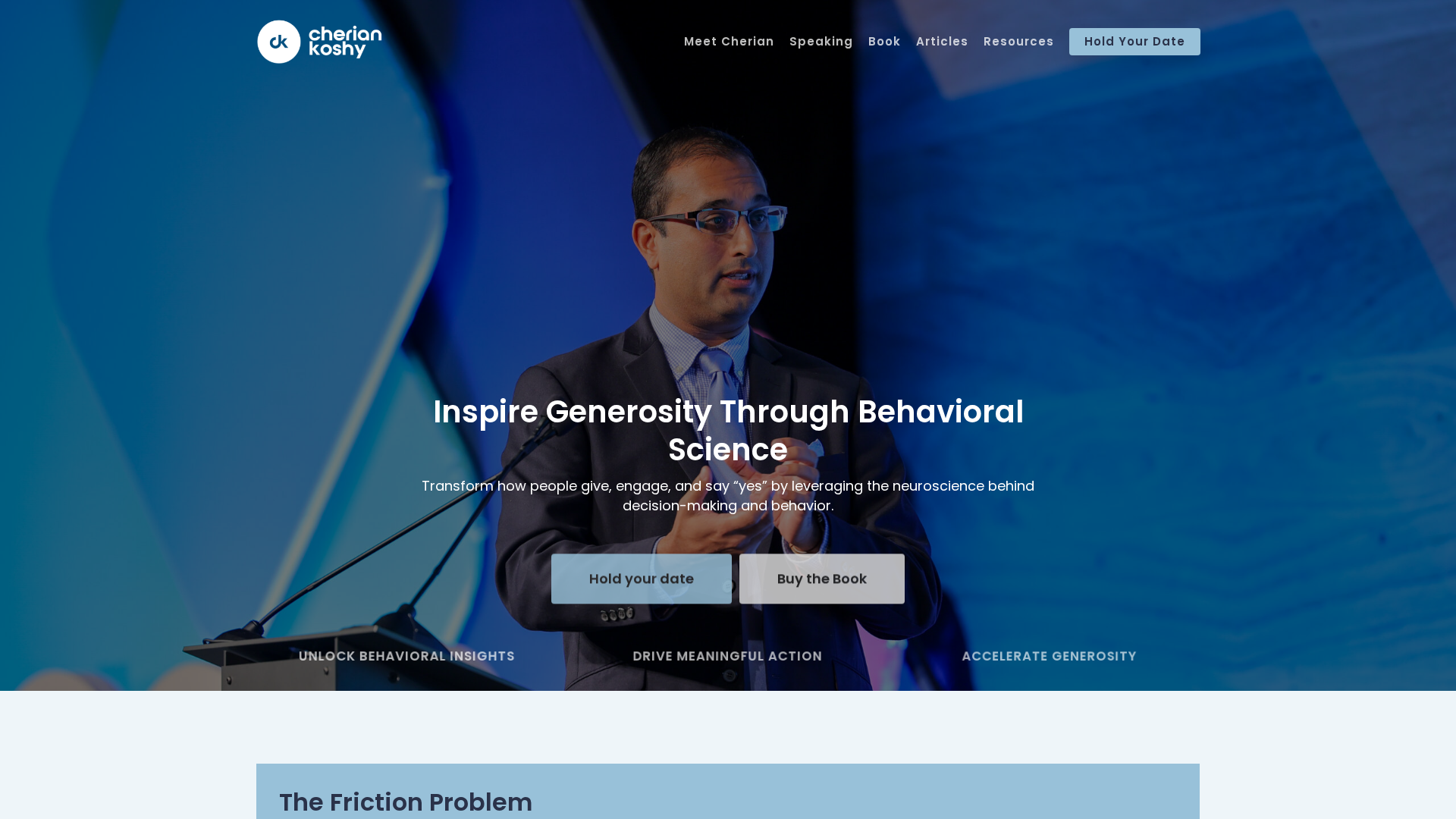
Build a revenue model donors trust. Cherian Koshy helps teams use behavioral science to strengthen giving, engagement, and year-round support.
Frequently Asked Questions
Q1: Top nonprofit fundraising consultants for growth?
Choose a consultant with proven donor behavior insight, clear goals, and skills your team lacks. Ask for references, a practical work plan, and measures beyond money raised.
Q2: How many revenue streams should we have?
Start with three reliable streams. Build each before adding more.
Q3: What should we track each month?
Track donor retention, gift size, cost to raise a dollar, and repeat giving.
Conclusion
Build a balanced revenue portfolio, earn donor trust, and match plans to team capacity. Giving USA data shows individual donors remain vital, so year-round care matters.


