

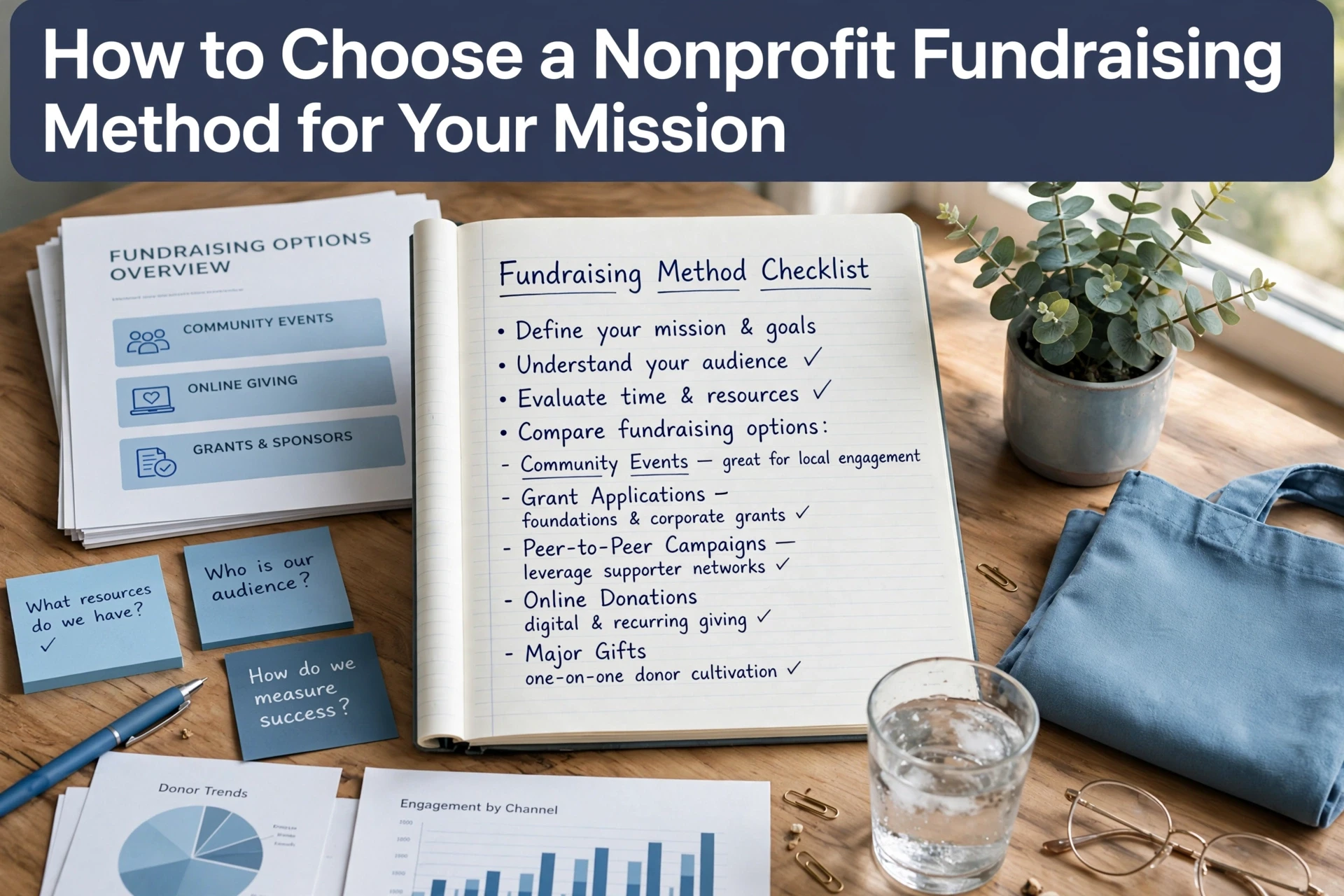
Quick Summary: Pick a fundraising method by matching it to your mission, audience, and staff capacity, not by copying what works elsewhere. Score each option on six criteria like cost and donor experience, then test it small before scaling. Judge success by repeat donors, since only 19% of first-time givers return, and focus on net value over gross income. The best fit, not the flashiest tactic, wins.
A community health nonprofit with trained, trusted volunteers can thrive on peer-to-peer campaigns. A small arts group with no training capacity might run the same campaign and burn out its two staff members. Same tactic, opposite results. To choose a nonprofit fundraising method well, match it to your mission, audience, and capacity – not to what raised the most money somewhere else. This guide gives you a simple framework for comparing every major method so your next campaign fits how your organization actually works.
Start With the Fundraising Outcome You Need
Before you choose a nonprofit fundraising method, name the result you need. Different methods do different jobs well, and the wrong match costs you donors and staff time.
Match the Method to the Goal
Every method solves a specific problem. Major gifts build big revenue from few donors. Peer-to-peer campaigns bring in new supporters fast. Recurring giving builds steady, predictable income. Grants fund programs but take months to land. A gala raises money and visibility, but often at a high cost per dollar. Many planners start by defining the desired outcome first, then picking tactics that fit it.
Decide What Success Means
Set one clear target: a dollar figure, a donor count, or a retention rate. Make it specific, measurable, and time-bound so your team can track progress. If you can’t define success, you can’t compare methods – you’ll only chase whatever looks popular.
Also Read: Articles – Cherian Koshy
Compare the Main Nonprofit Fundraising Methods
How do you choose nonprofit fundraising method options that fit your mission? Start by matching each method to your goal, staff size, and donor base. Here is the landscape in brief.
Individual Giving and Recurring Donations
Individual donors gave $394.2 billion in 2025, about 64% of all US giving, so this channel should anchor most plans. Ask people to give monthly instead of once. A Giving USA summary shows individuals still lead all funding sources.
Grants, Major Gifts, and Corporate Support
These methods pay well per ask but demand patience and relationships. Grant deadlines are strict. Major gift officers need time to build trust. Corporate sponsors want visibility in return.

Events and Peer-to-Peer Fundraising
Events raise money and awareness at once, but costs eat margins. Peer-to-peer lets supporters fundraise for you, extending reach. To choose nonprofit fundraising method blends wisely, compare effort against return, then choose nonprofit fundraising method priorities for the year.
Also Read: Resources – Cherian Koshy
Score Each Option Against Your Organization’s Reality
Use Six Fit Criteria
Rate each method from 1 to 5 on six criteria: your fundraising objective, the audience it reaches, staff capacity, total cost, donor experience, and long-term resilience. A gala might score high on community buzz but low on capacity for a three-person team. A major gifts program needs relationships you may not have yet. Be honest. A method that scores 2 on capacity will fail no matter how well it scores elsewhere.

Look at Net Value, Not Gross Income
Gross revenue hides the real story. Median nonprofits spend about $0.18 to raise $1, so a method that looks big can cost more than it earns. Compare cost per dollar raised across options, then subtract all costs, including staff time. Pick the method with the strongest net return, not the flashiest total.
Also Read: Resources – Cherian Koshy
Run a Small Test and Build the Follow-Up Before You Scale
Design the Pilot
Test one method on a small segment before committing budget. Pick a clear goal, a fixed timeframe, and one metric to judge it. Only about 19% of first-time donors give again, so a small, honest test protects you from scaling a method that only looks good on day one, per Fundraising Effectiveness Project data.
Measure the Next Gift, Too
Judge success by whether the method produces repeat donors, not just gifts. Donors who give twice retain at roughly 60%, so track the second gift. If your pilot only attracts one-time givers, fix the follow-up before you scale.
Ready to pick the right fundraising method for your mission? Cherian Koshy offers workshops and keynotes that turn donor science into confident, resilient fundraising.
Frequently Asked Questions
Q1: How should nonprofits choose a fundraising method?
Match the method to your goal, audience, staff capacity, and cost. Start small, test one option, then scale what works.
Q2: How many fundraising methods should we run at once?
Two or three. More splits your team’s focus and confuses donors.
Q3: Which method works best for small nonprofits?
Peer-to-peer or email campaigns. They cost little and build loyal donors.
Conclusion
There’s no single best fundraising method – only the best fit for your mission, capacity, and donors. Weigh each option against cost, audience, and long-term retention, then start small and test. With U.S. giving topping $617 billion in 2025, matching method to mission pays off.


