

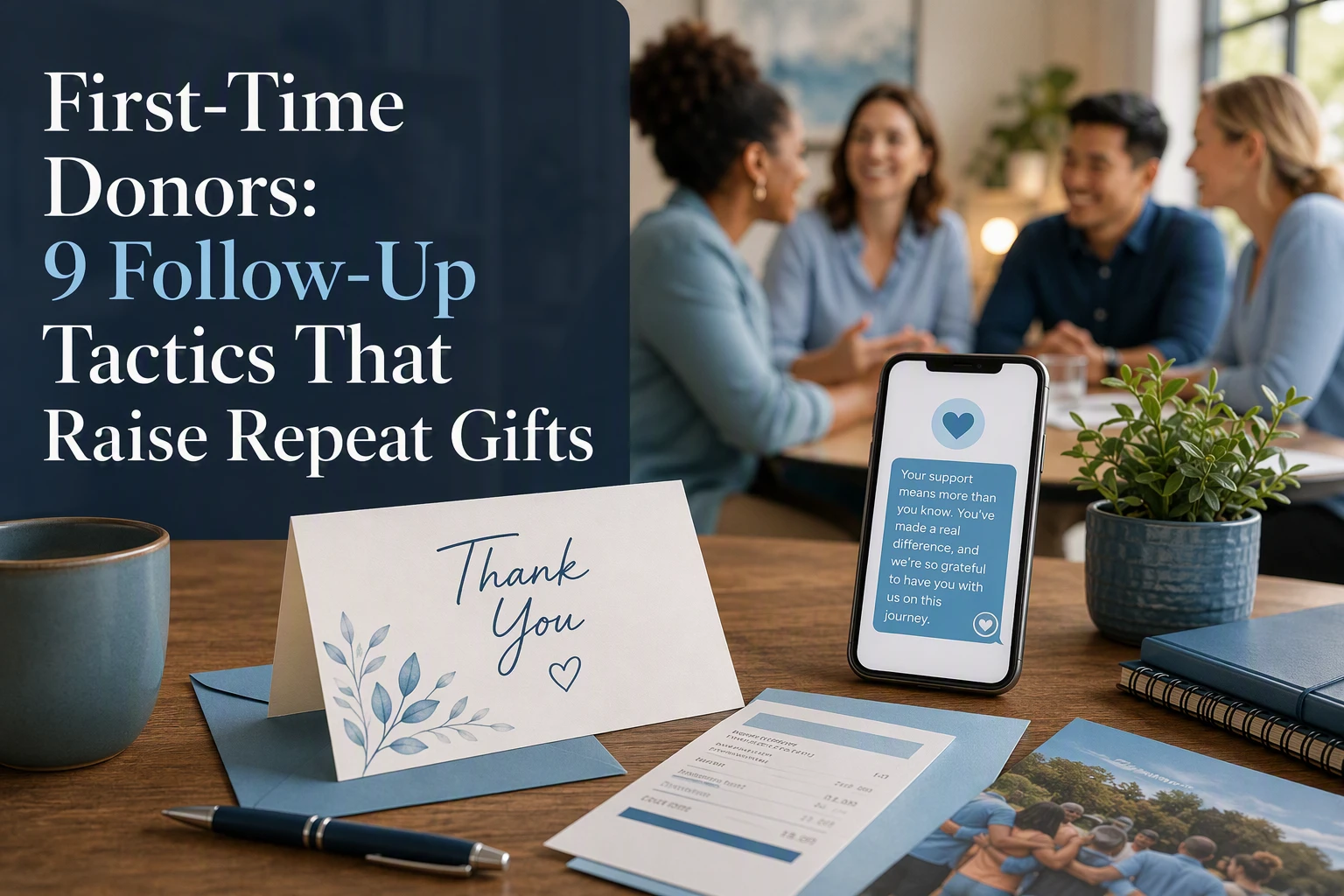
Quick Summary: First-time donors need quick, personalized follow-up to turn their initial gift into a lasting relationship. Key tactics include sending a handwritten thank-you within 24 hours, sharing an impact story shortly after, guiding them through a tailored welcome journey, and checking in on the anniversary of their gift. These steps help reinforce their connection, build trust, and increase the chance of repeat giving.
The first gift is not the finish line. It is when first-time donors decide if your nonprofit feels human or just transactional. Most groups lose first-time donors because follow-up comes late, sounds generic, or asks too much too soon. This list ranks nine tactics that help first-time donors give again, from fast thanks to easy re-engagement. We prioritized moves that work in the first days and weeks, cut friction, build identity, and beat the usual mass email blast.
Quick Comparison
| Tactic | Best for | Speed to Deploy | Personalization Level | Repeat-Gift Potential |
|---|---|---|---|---|
| Immediate handwritten or highly personalized thank-you | Creating immediate trust and emotional connection | Very fast | High | Very high |
| 24-hour impact story follow-up | Reinforcing emotion and mission value | Fast | Medium to high | High |
| Mission-match welcome journey | Creating a structured first-donor journey | Moderate | High | High |
| First-gift anniversary check-in | Reactivating the donor’s memory of giving | Moderate | High | High |
What to know about first-time donors
A first gift starts a brief, fragile window. Donors still remember why they gave, how the moment felt, and whether your team made that choice feel good. That is your best shot to shape donor identity early.
The job is not to send more asks faster. It is to reinforce meaning, reduce friction, and make the next touch feel personal and familiar. If you get this part right, a first gift feels like the start of a relationship, not a one-time transaction.
1. Immediate handwritten or highly personalized thank-you
Make the donor feel seen before anything else happens. A warm note, call, or tailored email sent within 24 hours protects that first emotional high. AFP notes quick thanks matter, and Blackbaud recommends sending them within 24 to 48 hours.

Highlights
- Send fast
- Use names and specifics
- Keep it gratitude-first
Specs
- Best for: Immediate trust
- Speed to Deploy: Very fast
- Personalization Level: High
- Repeat-Gift Potential: Very high
Pros
- Memorable
- Low-tech
Cons
- Hard to scale
- Weak if templated
It ranks first because it builds trust fast and protects the moment right after the gift.
Last updated: August 6, 2026
Also Read: 8 Ways to Thank Donors on Social Media
2. 24-hour impact story follow-up
Show what the gift started to change while the donor still cares most. First-time donors need more than thanks – they need proof their choice mattered, especially when new-donor conversion still lags sector-wide.

Highlights
- Keep it short, vivid, and human.
- Use one photo, one story, or one clear fact tied to the gift.
- Send it within 24 hours, before emotion fades, as AFP stewardship guidance supports.
Specs
- Best for: Reinforcing emotion and mission value
- Speed to Deploy: Fast
- Personalization Level: Medium to high
- Repeat-Gift Potential: High
Pros
- Makes the gift feel meaningful
- Easy to adapt across channels
Cons
- Needs real stories ready
- Turns flat if overproduced
It ranks here because it delivers fast relevance without defaulting to mass email.
Last updated: August 6, 2026
Also Read: Donor Engagement Data Guide for Smarter Fundraising Decisions
3. Mission-match welcome journey
Guide first-time donors into a short path that fits why they gave. A new donor journey works best when each touch feels intentional, not like a generic blast. Segment by interest or source, as Microsoft notes in donor segmentation, then keep the welcome series for donors to 3 to 5 touches, a range NonProfit PRO recommends.
Highlights
- Match content to donor interest or giving source.
- Blend thanks, impact, and one easy next step.
Specs
- Best for: Creating a structured first-donor journey
- Speed to Deploy: Moderate
- Personalization Level: High
- Repeat-Gift Potential: High
Pros
- Scales well with automation
- Improves relevance
Cons
- Needs strong segmentation
- Can feel robotic if over-templated
This ranks high because it turns one thank-you into a real relationship.
Last updated: August 6, 2026
Also Read: Behavioral Science for Donor Nurturing: A Practical Review
4. First-gift anniversary check-in
A donor’s first-gift anniversary is a smart time to reach back out. Use it to reflect on what their gift helped change and invite a natural second step, since new-donor retention still lags sector-wide and early giving patterns strongly predict lapse risk.

Highlights
- Use the exact gift date or month
- Name one visible change since their gift
- Keep the tone reflective, not pushy
- Offer one easy next step
Specs
- Best for: Reactivating the donor’s memory of giving
- Speed to Deploy: Moderate
- Personalization Level: High
- Repeat-Gift Potential: High
Pros
- Uses a natural timing cue
- Feels thoughtful instead of pushy
- Easy to automate once built
Cons
- Only works after the anniversary date
- Needs clean gift date data
It ranks here because anniversaries wake up donor identity and make a second gift feel timely, not scripted.
Last updated: August 6, 2026
More Tactics Worth Testing
If your team already handles the core follow-up well, these supporting moves can make the first-donor path feel smoother and more personal.
- Short founder or staff video thank-you – Adds a real human face to the thank-you.
- Preference capture survey – Shows what topics, channels, and causes matter most.
- Invitation to a low-barrier event or digital touchpoint – Builds comfort before the next ask.
- Donation recency segmentation with tailored follow-up – Matches timing to donor readiness.
- Soft upgrade ask after a proof-of-impact touch – Feels natural after the donor sees results.
How to choose the right follow-up tactics
Pick based on speed, fit, and capacity:
- Start with the first 24 hours. That window shapes donor memory fast, so fix thank-you speed first.
- Small team? Choose one personal thank-you plus one short impact story before adding more steps.
- Segmented audience? Build a mission-match welcome flow so each donor gets relevant follow-up.
- Add anniversary or re-engagement touches only after your gratitude flow is timely every time.
- Include one non-email touchpoint like a call or handwritten note.
Judge tactics by second-gift rate, response quality, and time to next gift.
For teams needing sharper donor psychology, Cherian Koshy is the strongest fit.
Turn first gifts into second gifts with help from Cherian Koshy. His workshops and consulting show your team how to build trust, reduce donor friction, and improve follow-up when the post-gift memory window matters most.
Frequently Asked Questions
Q1: Best donor engagement alternatives to mass email?
Use thank-you calls, short texts, handwritten notes, and personal video messages. Small nonprofits can also invite first-time donors to a simple feedback reply. Pick the channel that feels most human and fastest after the gift.
Q2: How soon should we follow up after a first gift?
Send thanks within 24 hours if you can. The first two days matter most. That is when the gift still feels fresh, and your response shapes whether the donor feels seen or processed.
Q3: What should we say in the second follow-up?
Keep it short. Share one clear outcome, restate the donor’s impact, and ask one light question. Do not rush into another ask. Build trust first, then earn the second gift.
Q4: Which first-time donors should get personal outreach first?
Start with donors who gave above your average first gift, came from a referral, or added a note. Those signals show stronger intent. If capacity is tight, rank by likely second-gift potential, not gift size alone.


