

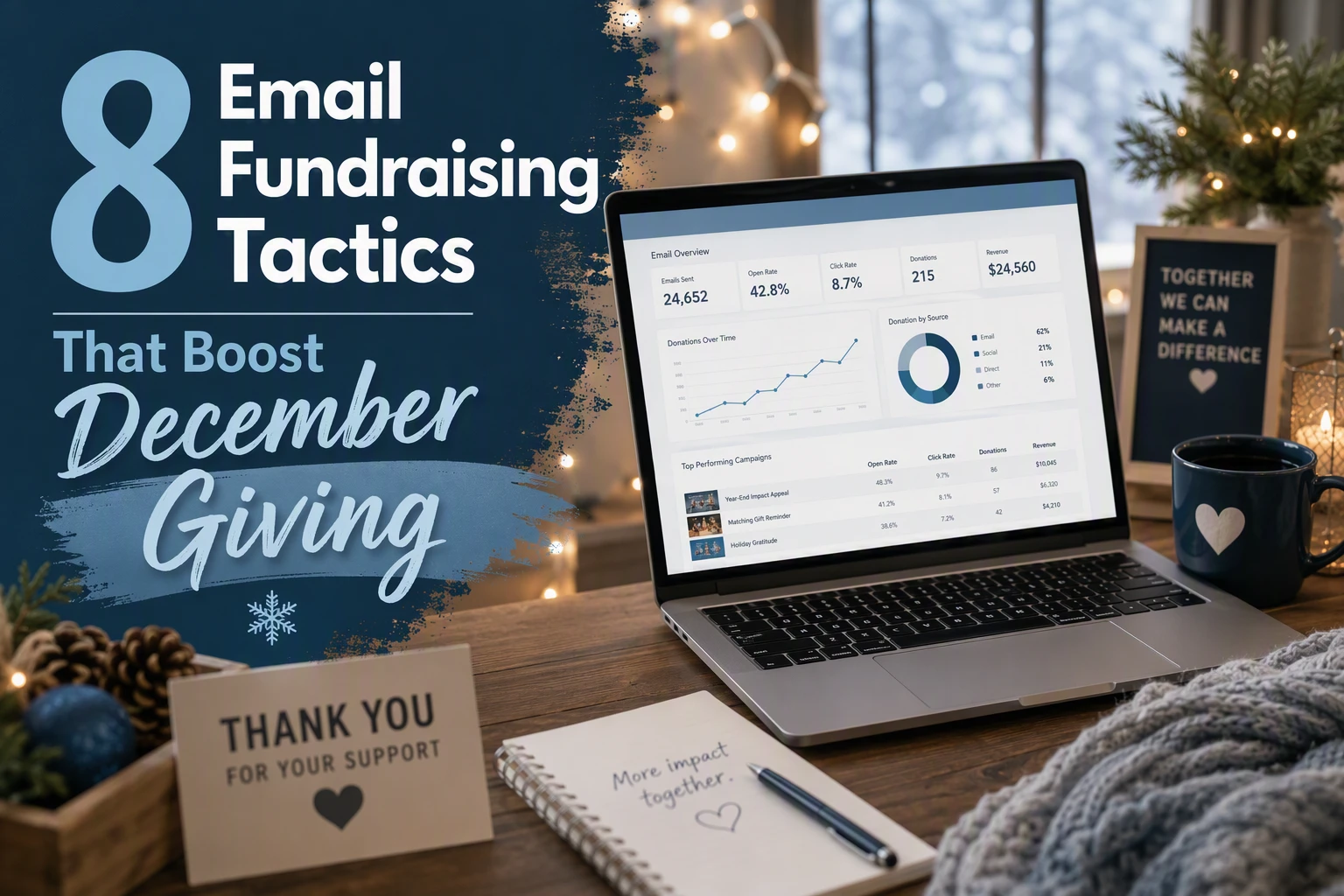
Quick Summary: Effective December email fundraising relies on smart segmentation, concise subject lines, compelling stories, and clear impact statements. Personalizing messages based on donor behavior and focusing on one story or ask increases engagement. Timing and removing friction in the donation process are crucial to capturing year-end giving opportunities.
If your team still sends one big year-end blast, you are likely missing easy gifts. December Giving Campaigns bring strong donor intent, but many emails still feel too broad and too hard to act on. These Email Fundraising Tips rank the December Fundraising Tactics that matter most. Built from year-end best practice, current benchmarks, and behavior science, these Email Fundraising Tips help you segment smarter, write sharper asks, and cut friction.
Quick Comparison
| Tactic | Best for | Primary move | December use case | Main payoff |
|---|---|---|---|---|
| Segment your list by donor behavior | Matching December asks to donor history | Split audiences by behavior and giving stage | Tailor year-end emails for active, lapsed, monthly, and new donors | Higher relevance and better conversion |
| Write shorter, sharper subject lines | Increasing open rates in crowded inboxes | Keep the subject line short and specific | Promote deadline, match, or impact in a few words | More opens and more clicks |
| Lead with one donor-centered story | Creating emotional connection fast | Tell one clear, donor-relevant story | Make year-end need feel immediate and personal | Stronger engagement and more motivated giving |
| Show the gift’s impact in plain language | Helping donors understand the value of giving | Connect gift amounts to outcomes | Show what a year-end gift achieves before Dec. 31 | Higher confidence and more completed gifts |
What to know about December email fundraising
December email fundraising rewards teams that move fast and remove friction. Donors are often more ready to give at year-end, but that window is short. Crowded inboxes can bury even strong appeals.
Good Email Fundraising Tips matter because timing, message match, and a smooth donation path work together. If your list is broad, your ask is vague, or your form feels slow, you can lose gifts that were close to landing.
December is not just a copy test. It is a timing and conversion test too.
1. Segment your list by donor behavior
One December email should not go to everyone. Split donors by recency, frequency, and gift size so each ask fits their history. Research on donor segmentation shows distinct groups respond to different messages, and year-end campaign guidance backs recent donors, lapsed donors, and first-time givers as high-value segments.

Highlights
- Group active, lapsed, monthly, and new supporters
- Match ask size and proof points to past giving
- Protect inbox relevance during crowded year-end weeks
Pros
- Feels more personal
- Lifts response and conversion
Cons
- Needs clean donor data
- Takes more planning than one blast
It ranks first because segmentation makes every December tactic work better.
Last updated: July 30, 2026
Also Read: 4 Ways Nonprofits Save Time & Money with AI-Led Production – Cherian Koshy
2. Write shorter, sharper subject lines
Your subject line has one job first – earn the open. In December, keep it short, specific, and donor-focused so it stands out on mobile and tells people why this email matters now.

Highlights
- Keep subject lines under 50 characters when you can. Mailchimp recommends short lines, and Litmus notes mobile often cuts them off fast.
- Use urgency only for real deadlines, matches, or tax dates.
- Test curiosity versus clarity, and personalize only when it fits the segment.
Pros
- Quick to test
- Lifts opens and clicks
Cons
- Easy to overdo urgency
- Weak if it feels generic or misleading
It ranks here because if nobody opens the email, nobody gives.
Last updated: July 30, 2026
3. Lead with one donor-centered story
December appeals work better when donors can picture one person, one moment, or one clear outcome. A detailed story helps make the need feel real, and research on tangible details in giving and identified victim narratives supports that instinct.

Highlights
- Focus on one beneficiary or one vivid result.
- Use specific, sensory language.
- Link the story to what the donor makes possible.
Pros
- Makes your mission easy to feel and remember.
Cons
- Falls flat if it gets vague or too sentimental.
It ranks here because story is the emotional engine behind the ask.
Last updated: July 30, 2026
Also Read: 3 Tips for Winning the Attention Economy in Nonprofit Campaigns – Cherian Koshy
4. Show the gift’s impact in plain language
Translate generosity into a concrete result. In December, spell out what each gift does before Dec. 31, so donors can picture the change and feel sure about giving. Stanford research found quantified impact statements can lift giving, and a 2026 meta-review says describing impact helps too.

Highlights
- Tie dollar amounts to concrete outcomes.
- Use a simple gift ladder in the email body.
- Explain what changes because of the gift.
- Avoid vague mission language without proof.
Pros
- Makes the ask tangible.
- Works with storytelling.
- Helps skimmers act fast.
Cons
- Broad outcomes sound generic.
- Examples must stay accurate and realistic.
It ranks here because clear impact lowers doubt and helps donors justify giving now, not later.
Last updated: July 30, 2026
How to choose the right email tactics for your December campaign
Pick tactics that make each message feel personal and easy to act on. Use these criteria:
- Start with segments first – past donors, new leads, monthly givers, and lapsed supporters need different emails.
- Judge the opening hard – the subject line gets the open, but the first paragraph must carry the feeling.
- Choose focus over volume – one story, one ask, one CTA usually beats a crowded message.
- Tie gifts to outcomes – say what $25 or $100 does in real life.
- Fix donation friction early – test the form, mobile flow, and payment steps before heavier sends.
- Save urgency for late December – real deadlines work best when they are actually close.
If you want help shaping donor-centered messaging, Cherian Koshy is the strongest fit here because he pairs fundraising with behavioral science, which is exactly what December email decisions need.
Need sharper December emails that move donors to act? Work with Cherian Koshy to turn behavioral science into better fundraising messages, timing, and results.
Frequently Asked Questions
Q1: What are the most effective email fundraising tactics to boost donations in December?
Use urgency, clear asks, tight deadlines, donor-centered stories, matched gifts, smart segmentation, and a strong final 3-day push. Keep each email focused on one action. Test send times and subject lines, then repeat what lifts clicks and gifts.
Q2: How can nonprofits craft compelling subject lines to increase email engagement during year-end giving?
Lead with one clear benefit or deadline. Use plain language, specific numbers, and real stakes. Keep it short. Good subject lines hint at impact, not hype. A simple line like “48 hours left to fund winter meals” often beats clever copy.
Q3: What storytelling techniques can maximize donor influence in nonprofit fundraising emails?
Tell one person’s story, not ten. Show the problem, the turning point, and the result a donor can help create. Add concrete detail, keep emotion honest, and connect the gift amount to a visible outcome donors can picture fast.


