

Quick Summary: Bequest giving surged nearly 20% in 2025, making it the fastest-growing donation source and highlighting the importance of trust and long-term donor relationships. Nonprofits should update their messaging to be clearer, more personal, and less jargon-heavy, focusing on building trust and engaging loyal donors early. Younger donors are more open to legacy giving, so organizations should create simple, values-based pathways for them to express future intent.
Giving USA 2026 reports bequest giving rose 19.7% to $62.19 billion in 2025, the fastest gain in charitable support. That makes Donor Behavior Trends impossible to ignore. For Nonprofit Fundraising teams, the risk is clear: donor counts stay tight while legacy dollars grow. This section reads the data through real Donor Behavior Trends, trust signals, and Bequest Giving Strategies so leaders can spot stronger Donor Behavior Trends and act sooner.
Why Bequests Became the Fastest-Growing Gift Source
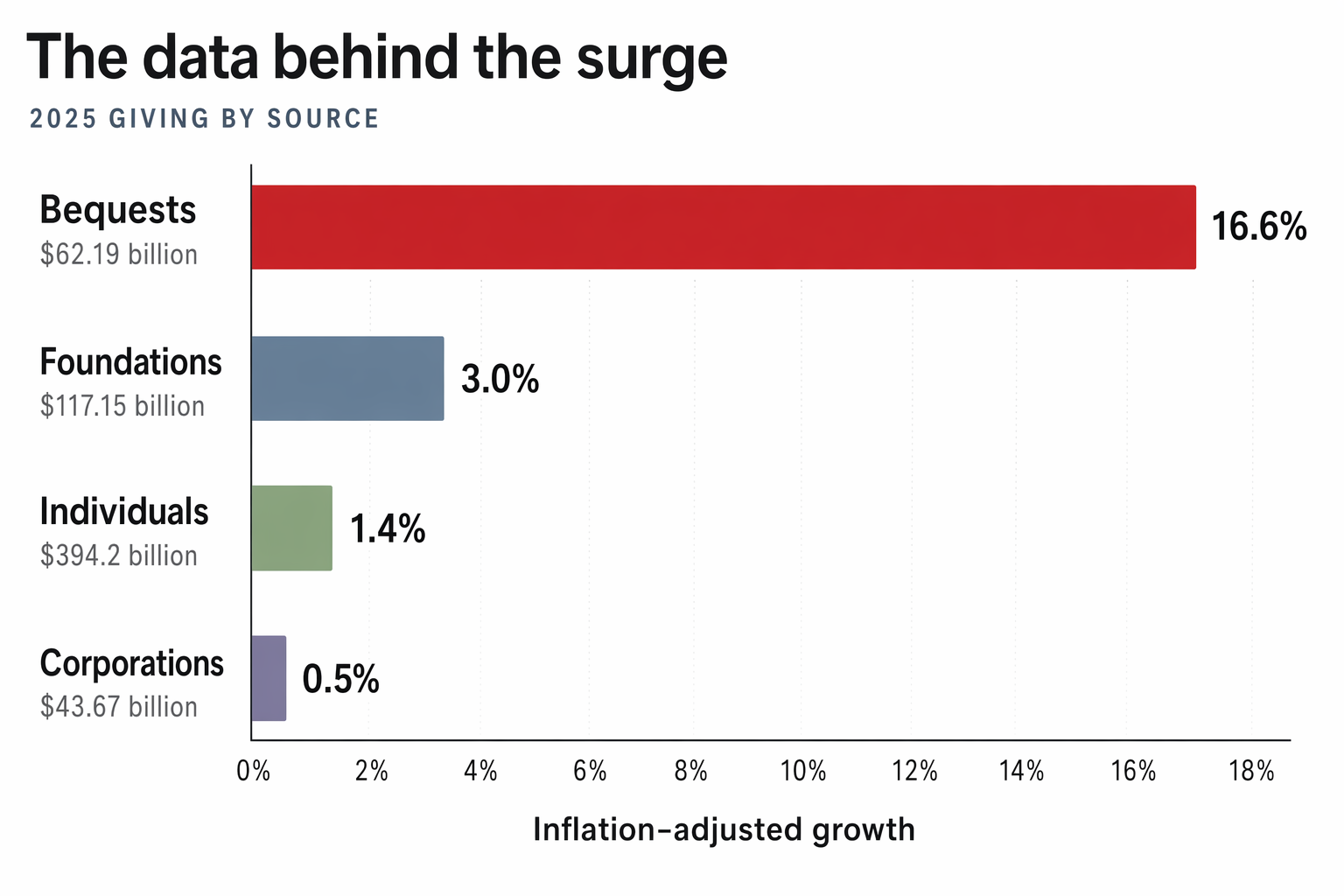
The data behind the surge
Bequests led every major giving source in 2025. According to Indiana University Lilly Family School of Philanthropy, bequest giving hit $62.19 billion, up 19.7% in current dollars and 16.6% after inflation. That was the biggest jump across individuals, foundations, corporations, and estates.
| Source | 2025 amount | Inflation-adjusted growth |
|---|---|---|
| Individuals | $394.2 billion | 1.4% |
| Foundations | $117.15 billion | 3.0% |
| Bequests | $62.19 billion | 16.6% |
| Corporations | $43.67 billion | 0.5% |
This is not a small bump. Bequests have posted strong gains in three of the last four years.
Why the market matters
Strong markets raised estate values, especially for wealthy households that hold stocks and other assets. CNBC’s 2026 coverage ties the bequest jump to rising net worth and the early signs of the Great Wealth Transfer.
For fundraisers, the lesson is simple:
- Legacy intent often starts before wealth turns into cash
- Older loyal donors may now be your best growth segment
- Trust and long-term stewardship matter more than one-time asks
What the Trend Says About Donor Behavior in 2026
The bequest jump is not just a finance story. It is a behavior story. Giving USA 2026 says bequests rose 16.6% after inflation in 2025, the fastest growth of any giving source. That points to three clear shifts.
1. Trust is now part of the ask
- Donors do not separate gift size from confidence.
- Give.org’s 2026 Donor Trust Report found 67.7% say trust is essential before giving, but only 18.3% report high trust in charities.
- That gap matters more for legacy gifts, where the donor is backing your future, not just your next campaign.
2. Repeated support predicts future legacy support
- Many bequests start with small, steady gifts.
- Long-time donors already show habit, belief, and loyalty.
- In 2026, legacy strategy should start with retention data, not only age or wealth screens.
If someone gives for 5, 10, or 20 years, treat that as a planned giving signal.
3. Younger donors are still relevant to legacy strategy
- Younger donors are more open to being asked.
- They may not fund a bequest soon, but they can state intent earlier.
- Build simple paths now:
- values-based messaging
- easy will language
- low-pressure follow-up
How Nonprofits Should Adjust Legacy Messaging Now
Bequest giving rose 16.6% after inflation in 2025, the fastest growth of any giving source, according to Indiana University Lilly Family School of Philanthropy. That means your legacy message should feel current, useful, and low-pressure. For the bigger trend, link this section back to the parent pillar post on Changing Giving Patterns in 2026.
What to change in donor communications
- Use plain words like “leave a gift in your will” instead of legal jargon.
- Show today’s impact and tomorrow’s legacy in the same message.
- Add short prompts in newsletters, thank-you emails, and appeal postscripts.
- Lead with trust, not tax talk.
Donors respond when organizations clearly share their story and needs, as noted in ABC News’ coverage of Giving USA 2026.

Who to prioritize first
| Segment | Why now | First move |
|---|---|---|
| Long-time annual donors | They already trust you | Send a soft legacy message |
| Lapsed loyal donors | They may still care deeply | Reconnect with mission impact |
| Older recurring donors | They often prefer simple planning | Offer a clear will-gift option |
Where to connect this back to the fundraising stack
- Add legacy prompts to email, direct mail, and thank-you flows.
- Flag likely prospects in your CRM based on loyalty, not just wealth.
- Train gift officers to ask simple future-focused questions.
- Track replies, page visits, and self-reported expectancies across teams.
Turn the 2026 bequest surge into stronger trust and retention. Work with Cherian Koshy to sharpen legacy messaging, donor insight, and team strategy.
Frequently Asked Questions
Q1: How are changing bequest patterns impacting donor engagement strategies in 2026?
Teams now flag loyal mid-level donors earlier, start legacy talks sooner, and focus on trust signals like clear reporting, steady contact, and simple estate language.
Q2: What are the top donor behavior trends shaping fundraising in 2026 across sectors?
Donors want proof, low-friction giving, and personal meaning. Retention matters more than one-time acquisition. Older supporters still drive bequests, but younger donors expect transparency and values fit.
Q3: How can nonprofits build trust and transparency to increase donor bequests in 2026?
Show impact clearly, explain fund use, report back often, and make planned giving easy to discuss. Leaders like Cherian Koshy stress reducing fear and confusion in donor decisions.
Conclusion
Bequests reshaped the 2026 fundraising story. With U.S. giving at $617.2 billion in 2025 and bequests up 16.6% after inflation, smart teams should treat legacy giving as a trust and retention strategy, not a side program.


